Dealership Lead Management: 5 Mistakes Costing You Sales in 2026

Stop losing dealership sales to poor lead management. Learn 5 critical mistakes and AI-powered fixes that boost conversion rates 35%. Automotive-specific strategies for 2026.

Last Updated: January 27, 2026 | 7-minute read

Poor lead management is the silent profit killer in automotive retail. Every day, dealerships lose thousands of dollars not because they lack leads, but because they mishandle the ones they already have. If your dealership struggles to convert inquiries into sales, the problem likely isn’t your inventory or pricing, it’s how you manage leads from first contact to final sale.

In 2026, effective dealership lead management combines speed, personalization, and AI automation. Dealerships that master these elements convert 35-45% more leads than those relying on outdated manual processes. This guide identifies the five most costly lead management mistakes and provides actionable solutions you can implement today.

Why Lead Management Matters More in 2026 (Quick Stats)

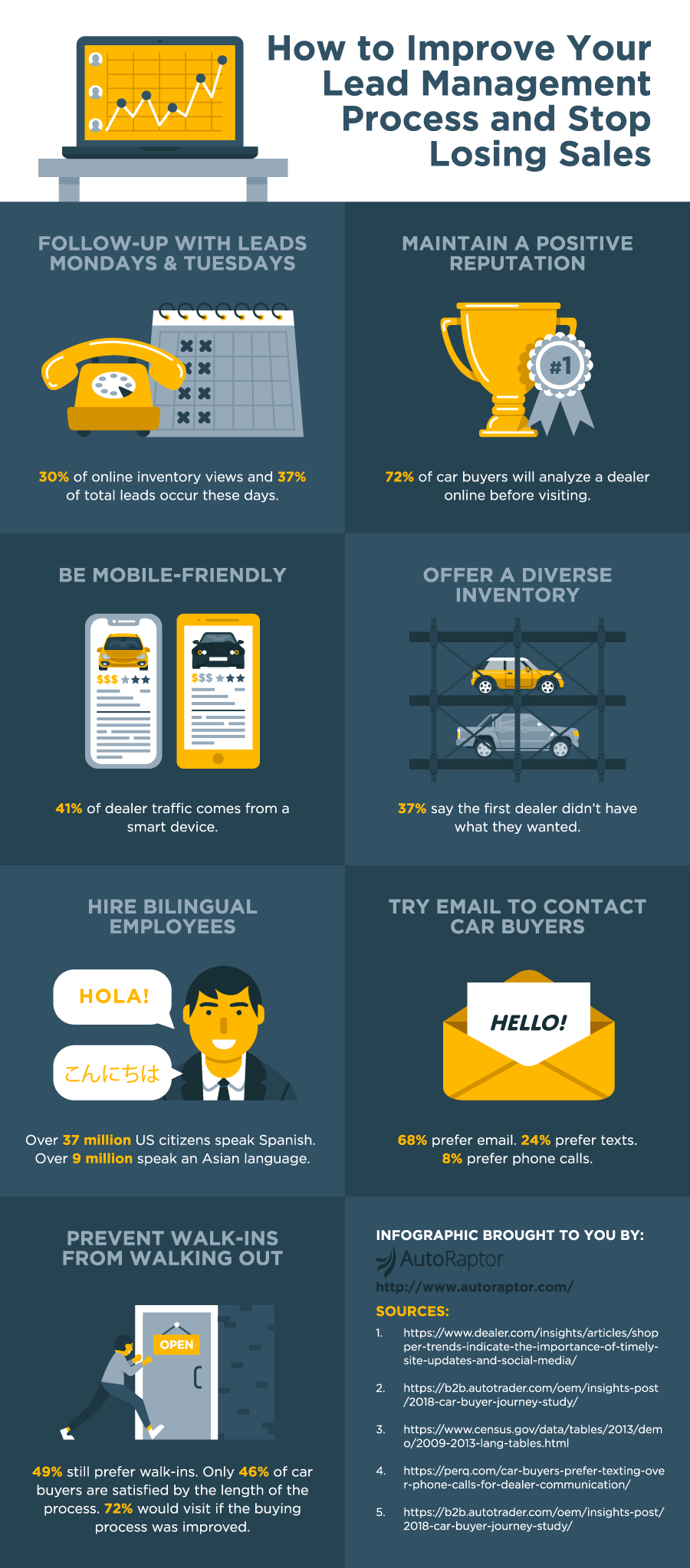
The automotive buying landscape has fundamentally changed. Today’s car buyers are digital-first, comparison-shopping across multiple dealerships simultaneously, and expecting instant, personalized responses. Consider these critical statistics:

Response Time Impact:

  • 78% of car buyers purchase from the first dealership that responds
  • Average response time (manual): 4-8 hours
  • Optimal response time: Under 60 seconds
  • Leads contacted within 5 minutes are 9x more likely to convert

Lead Volume vs. Conversion:

  • Average dealership receives 200-400 leads monthly
  • Manual lead management: 8-12% conversion rate
  • AI-powered lead management: 18-28% conversion rate
  • Cost per lead continues rising (up 24% since 2023)

Technology Adoption Gap:

  • 68% of dealerships lack AI automation
  • 54% don’t use lead scoring
  • 42% have poor CRM utilization
  • These dealerships lose 30-40% of potential sales

The Bottom Line: With leads becoming more expensive and buyers more demanding, effective lead management is no longer optional, it’s the difference between thriving and barely surviving.

The 5 Critical Lead Management Mistakes Dealerships Make

Mistake 1: Slow Response Times (The 60-Second Rule)

The Problem: Most dealerships respond to online leads in 4-8 hours, if at all. By then, the buyer has already contacted three competitors, scheduled two test drives, and likely made a purchase decision. Every minute of delay exponentially decreases your conversion chances.

Why It Happens:

  • Sales teams juggling showroom traffic
  • Manual lead assignment processes
  • No after-hours coverage
  • CRM notifications go unnoticed

The Cost: A dealership receiving 300 leads monthly at $150 per lead loses approximately $81,000 in potential sales monthly due to slow response alone (assuming 60% of delayed-response leads buy elsewhere).

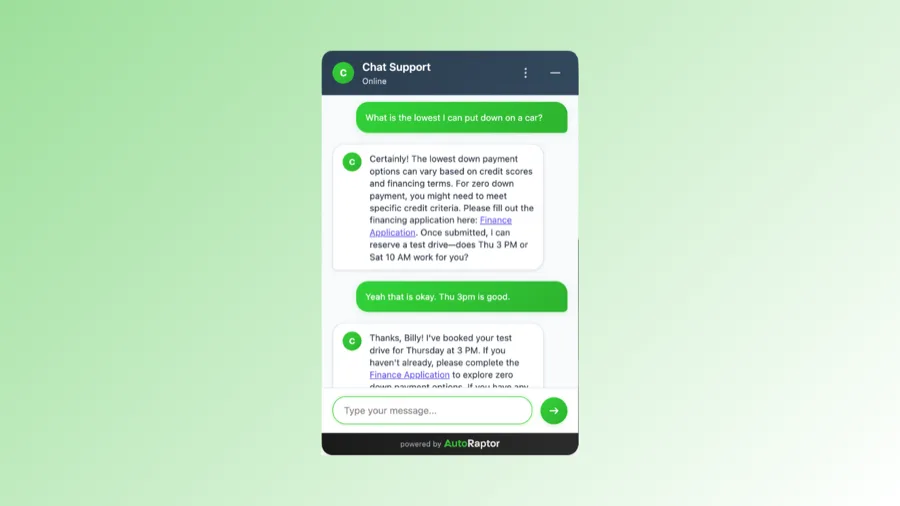
The Fix: Implement AI-powered instant response that acknowledges every inquiry within 60 seconds, 24/7, across channels (web, text, email, social media). This doesn’t replace your salespeople, it ensures no lead waits while your team handles existing customers.

Mistake 2: No Lead Scoring System

The Problem: Without lead scoring, sales teams treat every inquiry equally, spending just as much time on tire-kickers as ready-to-buy prospects. This wastes resources on low-intent leads while high-intent buyers don’t receive the focused attention they deserve.

Why It Happens:

  • Belief that “every lead is valuable” (true, but not equally)
  • No framework for prioritization
  • CRM lacks scoring capabilities
  • Team resistance to “complicated” systems

The Cost: Sales reps waste 40-50% of their time on leads unlikely to convert, while hot prospects receive mediocre attention and buy elsewhere.

The Fix: Create a simple lead scoring framework:

High Priority (9-10 points):

  • Requested specific vehicle quote
  • Test drive scheduled
  • Trade-in submitted
  • Financing application started
  • Repeat website visits (3+)

Medium Priority (5-8 points):

  • General inventory inquiry
  • First-time website visitor
  • Price range provided
  • Email/text engagement

Low Priority (1-4 points):

  • General question
  • No specific vehicle interest
  • No response to follow-up
  • Duplicate/spam indicators

Focus 70% of effort on high-priority leads, 20% on medium, 10% on low.

Mistake 3: Generic Follow-Up (Not Personalized)

The Problem: “Thanks for your interest in [Dealership Name]! We have great deals on all inventory. Call us to learn more!” This generic approach screams “mass email” and gets ignored. Car buyers expect personalization, they want you to reference their specific vehicle interest, trade-in details, and previous interactions.

Why It Happens:

  • Lack of time for individual customization
  • Poor CRM data capture
  • No automation for personalization
  • Templates never updated

The Cost: Generic follow-up converts at 3-5%, while personalized follow-up converts at 15-22%, a 4-5x difference.

The Fix: Every touchpoint should include:

  • Buyer’s name
  • Specific vehicle(s) they viewed
  • Their stated needs (family size, budget, timeline)
  • Trade-in details if provided
  • Reference to previous conversation

Example: “Hi Sarah, saw you checked out the 2025 RAV4 Limited in blue again last night. With your Accord trade-in, your payment would be around $485/month. Want to schedule a test drive this weekend?”

Modern automotive CRM systems with AI can automatically personalize at scale, no manual work required.

Mistake 4: Ignoring AI Automation

The Problem: In 2026, dealerships without AI automation are like dealerships without internet in 2010, technically functional but hopelessly outmatched. AI handles instant response, consistent follow-up, lead scoring, and re-engagement automatically, 24/7, without human error or fatigue.

Why It Happens:

  • “We’ve always done it manually” mindset
  • Fear of technology
  • Concern about losing “personal touch”
  • Budget misconceptions (AI is affordable now)

The Cost: Manual-only dealerships convert 30-40% fewer leads and require 3x more staff to handle the same lead volume as AI-enabled competitors.

The Fix: Implement AI for:

  • Instant acknowledgment (60-second response to all inquiries)
  • Lead qualification (asks key questions, gathers information)
  • Automated follow-up (perfectly timed sequences)
  • Re-engagement (revives cold leads automatically)
  • Smart escalation (hands off to humans at optimal moment)

AI doesn’t replace your team, it eliminates busywork so they focus on relationship-building and closing deals.

Mistake 5: Poor CRM Utilization

The Problem: Many dealerships have a CRM but use only 20% of its capabilities. Lead data is incomplete, notes are sparse, follow-up tasks are ignored, and reporting features sit unused. The CRM becomes an expensive Rolodex instead of a sales multiplier.

Why It Happens:

  • Inadequate training
  • Complicated interface
  • No accountability for usage
  • CRM not built for automotive retail

The Cost: Poor CRM utilization leads to missed follow-ups, duplicate efforts, lost leads, and zero visibility into sales pipeline health.

The Fix: Mandate Complete Data Entry:

  • Every lead: full contact info, vehicle interest, source
  • Every interaction: logged with notes and next steps
  • Every test drive: captured with feedback
  • Every quote: stored with details

Use Automation Features:

  • Automatic task creation (follow-up reminders)
  • Workflow triggers (lead assignment by source)
  • Email/text templates with personalization
  • Mobile access for on-the-go logging

Track Key Metrics:

  • Lead response time
  • Conversion rate by source
  • Sales rep activity levels
  • Pipeline value and velocity

Choose the Right CRM: Generic CRMs fail in automotive retail. Choose an automotive CRM built specifically for dealerships with native automotive features, DMS integration, and intuitive mobile apps.

How to Fix Your Lead Management Process (5 Solutions)

Now that you understand the mistakes, here’s your action plan:

Solution 1: Implement AI-Powered Instant Response

Action Steps:

  1. Enable AI sales assistant in your automotive CRM
  2. Configure instant-response templates for common inquiries
  3. Set up after-hours automation (evenings, weekends)
  4. Test with sample leads to ensure quality
  5. Monitor performance and optimize messaging

Timeline: Can be implemented in 1-2 days ROI: 20-30% increase in appointment bookings within 30 days

Solution 2: Create a Simple Lead Scoring Framework

Action Steps:

  1. Define your high/medium/low priority criteria
  2. Configure CRM to auto-score based on behaviors
  3. Create separate workflows for each priority level
  4. Train team on prioritization approach
  5. Review and adjust scoring monthly

Timeline: 1 week to implement ROI: 40% increase in sales team productivity

Solution 3: Personalize Every Touchpoint

Action Steps:

  1. Audit current templates, identify generic language
  2. Add personalization variables (name, vehicle, trade-in)
  3. Reference specific behaviors (website visits, email opens)
  4. Use automotive CRM automation to populate details automatically
  5. A/B test personalized vs. generic for proof

Timeline: 2-3 days to update templates ROI: 3-4x improvement in response rates

Solution 4: Automate Repetitive Tasks

Action Steps:

  1. Identify tasks taking most time (follow-up, data entry)
  2. Configure automotive CRM automation for these tasks
  3. Set up triggered emails/texts based on behaviors
  4. Create automated lead nurture sequences
  5. Use AI for re-engagement of cold leads

Timeline: 1 week to set up automation ROI: 50% reduction in administrative work

Solution 5: Optimize Your Automotive CRM

Action Steps:

  1. Conduct full CRM audit (features used vs. available)
  2. Schedule comprehensive training for entire team
  3. Create accountability measures (CRM usage reports)
  4. Integrate with DMS and marketing tools
  5. Switch CRMs if current one lacks automotive focus

Timeline: 2 weeks for optimization, 30-60 days for CRM switch ROI: 25-35% increase in overall conversion rates

Quick Wins: Start Improving Today

Don’t wait to fix everything. These changes take under 1 hour and deliver immediate results:

Today (Next 60 Minutes): 

  • Set up email/text alerts for new leads on your phone 
  • Create response time goal: 60 seconds for acknowledgment 
  • Update your email signature with click-to-text link 
  • Test your automotive CRM mobile app

This Week: 

This Month: 

  • Implement basic lead scoring (high/medium/low) 
  • Enable AI instant-response features 
  • Create automated follow-up sequence 
  • Start tracking conversion rate by lead source

This Quarter: 

FAQs About Dealership Lead Management

What is automotive lead management?

Automotive lead management is the process of capturing, tracking, nurturing, and converting potential car buyers from their first inquiry through final sale. It includes lead capture (website, phone, text, social media), instant response and qualification, lead scoring and prioritization, personalized follow-up sequences, CRM tracking and reporting, and sales team coordination. Effective dealership lead management combines speed (responding within 60 seconds), personalization (referencing specific vehicle interests and needs), and automation (AI handling repetitive tasks) to maximize conversion rates and sales productivity.

How fast should dealerships respond to leads?

Dealerships should respond to new leads within 60 seconds for optimal conversion rates. Research shows that 78% of car buyers purchase from the first dealership that responds, and leads contacted within 5 minutes are 9x more likely to convert than those contacted after 30 minutes. In 2026, instant response is achievable through AI-powered automation that acknowledges inquiries 24/7 across all channels (email, text, web chat, social media) without human delay. While a human sales rep may not be immediately available at 11 PM on Saturday, an AI assistant can provide instant acknowledgment, gather qualifying information, and schedule follow-up for the next business day, keeping the lead engaged and preventing them from moving to competitors.

What’s a good lead conversion rate for dealerships?

A good lead conversion rate for automotive dealerships in 2026 is 15-25%, though this varies significantly based on lead quality and source. Industry benchmarks show: website leads (organic): 15-20% conversion, third-party leads (Cars.com, Autotrader): 8-12% conversion, social media leads: 10-15% conversion, referral leads: 30-40% conversion, and service customer conquest: 25-35% conversion. Dealerships using AI-powered lead management consistently achieve 18-28% overall conversion rates—35-40% higher than dealerships relying on manual processes. If your conversion rate is below 12%, you likely have significant gaps in response speed, follow-up consistency, or lead qualification processes.

How does AI improve lead management?

AI improves dealership lead management by providing instant 24/7 response (acknowledging every inquiry within 60 seconds regardless of time or day), automatic lead qualification (asking key questions and gathering vehicle interest, budget, timeline), intelligent lead scoring (analyzing behaviors and assigning priority scores automatically), personalized follow-up at scale (customizing messages based on specific interests without manual work), perfect timing (sending follow-ups when each individual lead is most likely to engage), cold lead re-engagement (automatically reviving dormant leads with targeted messaging), and smart escalation (identifying hot leads and alerting sales reps immediately). AI handles the repetitive, time-consuming tasks so your sales team focuses on relationship building and closing deals. Dealerships using AI see 40-60% higher response rates, 20-30% better conversion rates, and 50% reduction in administrative workload.

Final Thoughts: Lead Management as Competitive Advantage

In 2026, superior lead management is the primary differentiator between thriving dealerships and struggling ones. You’re competing against dealers who respond instantly, personalize every interaction, and use AI to never miss an opportunity. If you’re still relying on manual processes and generic follow-up, you’re losing 30-40% of potential sales to more sophisticated competitors.

The good news? These five fixes are actionable, affordable, and deliver measurable ROI within 30-90 days. Start with the quick wins today, implement the five solutions this month, and watch your conversion rates climb.

Your lead management process is either your greatest asset or your biggest liability. Which will it be?

Transform Your Lead Management with AutoRaptor

AutoRaptor’s AI-powered dealership CRM eliminates the five mistakes covered in this guide automatically. With instant lead response, intelligent scoring, personalized automation, and comprehensive tracking, AutoRaptor helps dealerships convert 35% more leads while reducing administrative work by 50%.

See the difference AI makes: Schedule Your Free Demo →

Or explore AutoRaptor’s lead management features to see how modern CRM technology transforms your sales process.

In today’s competitive business landscape, effectively managing leads is essential for maintaining a steady flow of sales and

Share with a friend
AutoRaptor Core
AutoRaptor Core